Hims & Hers
Background
At Hims, internal tools were the backbone of the company, storing patient information and helping doctors view it to make better prescribing decisions. These tools hadn’t been updated since they were first built, and even simple tasks like creating patient forms often required a veteran team member to navigate the system. I was tasked with designing the first modern iteration of these tools, laying the foundation for a more intuitive and efficient experience.
Services
Product Design
Prototyping
Interal Tools
Connecting patients with clinicians using important data
Every day, Hims & Hers serves new and returning patients seeking treatment across a variety of conditions. To provide high-quality care, clinicians rely on an internal tool for creating patient intake forms. The challenge was that this tool hadn’t been updated since the company’s early days, making it confusing and hard to use, especially for new team members.
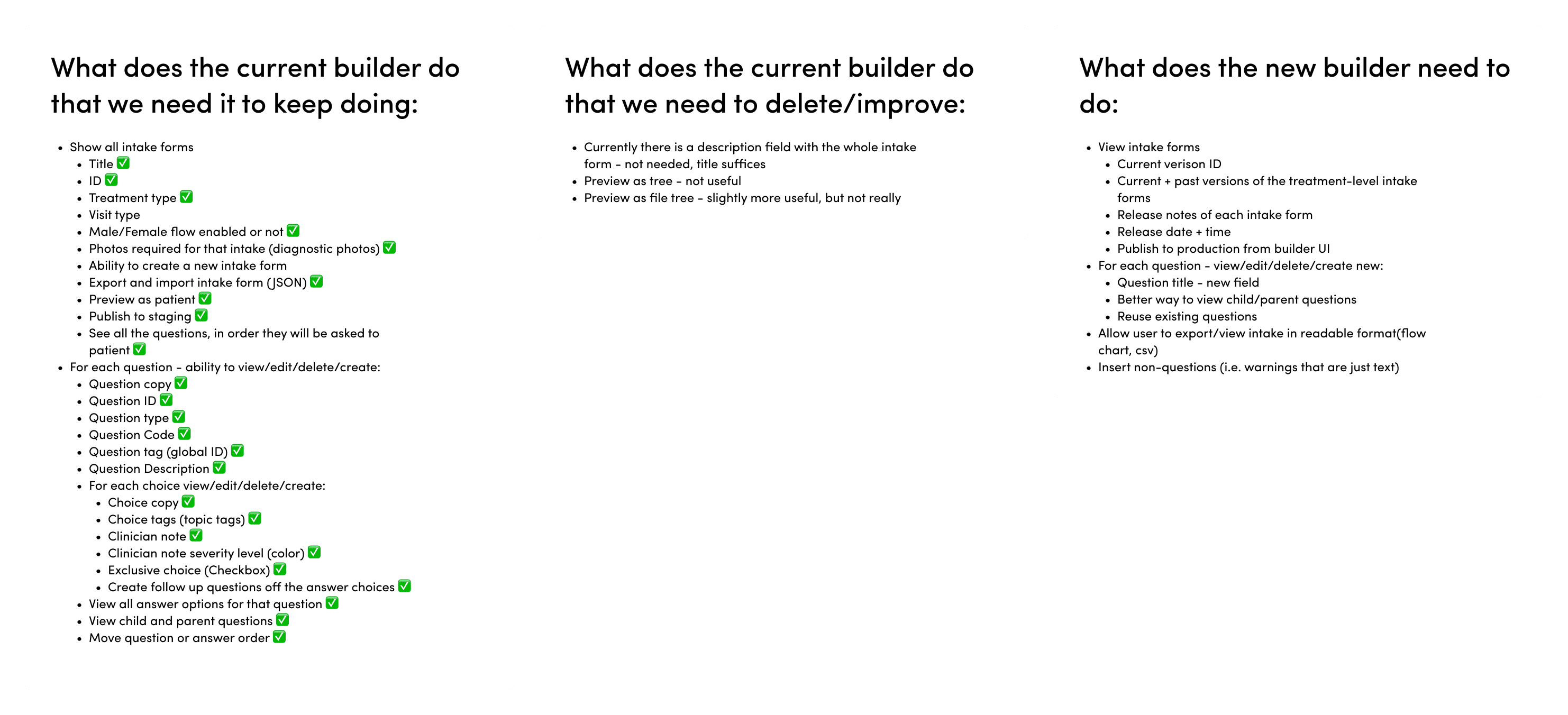
I worked closely with Product Managers and Engineers to understand the tool’s needs and constraints as we redesigned the intake forms. Our goal was to make them clearer and more efficient, benefiting both clinicians and the platform support teams. Together, we decided which elements were essential, which could be removed, and where we could improve the overall experience.
Intake forms purpose
The internal intake form tool is complex, with many interconnected parts. It’s the first place patients share important information with our clinicians, and it also serves as a key resource for our Product team to create and update forms across all products. Clinicians and the Product team work together to craft the questions, ensuring doctors have the information they need to make better decisions about patient care.
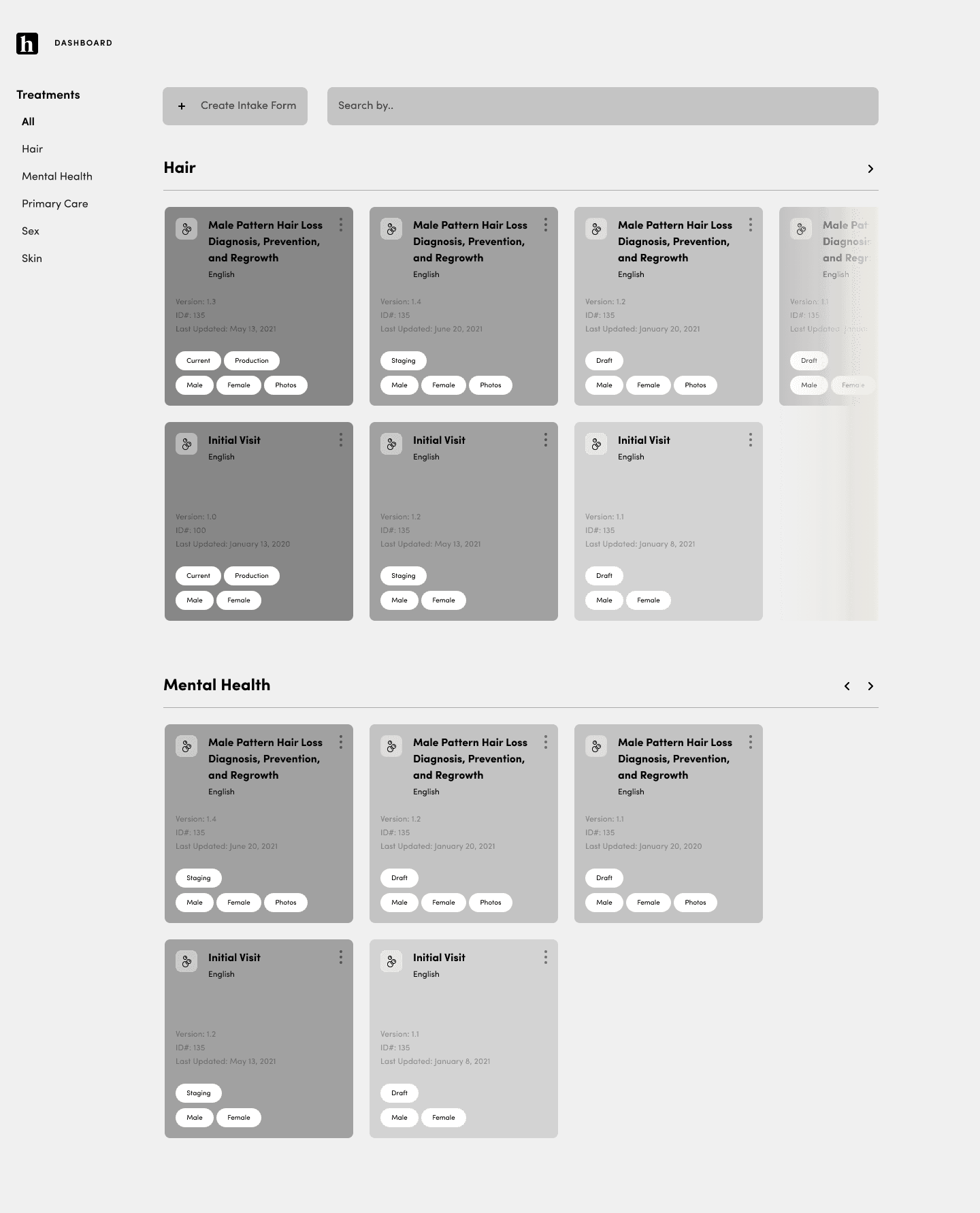
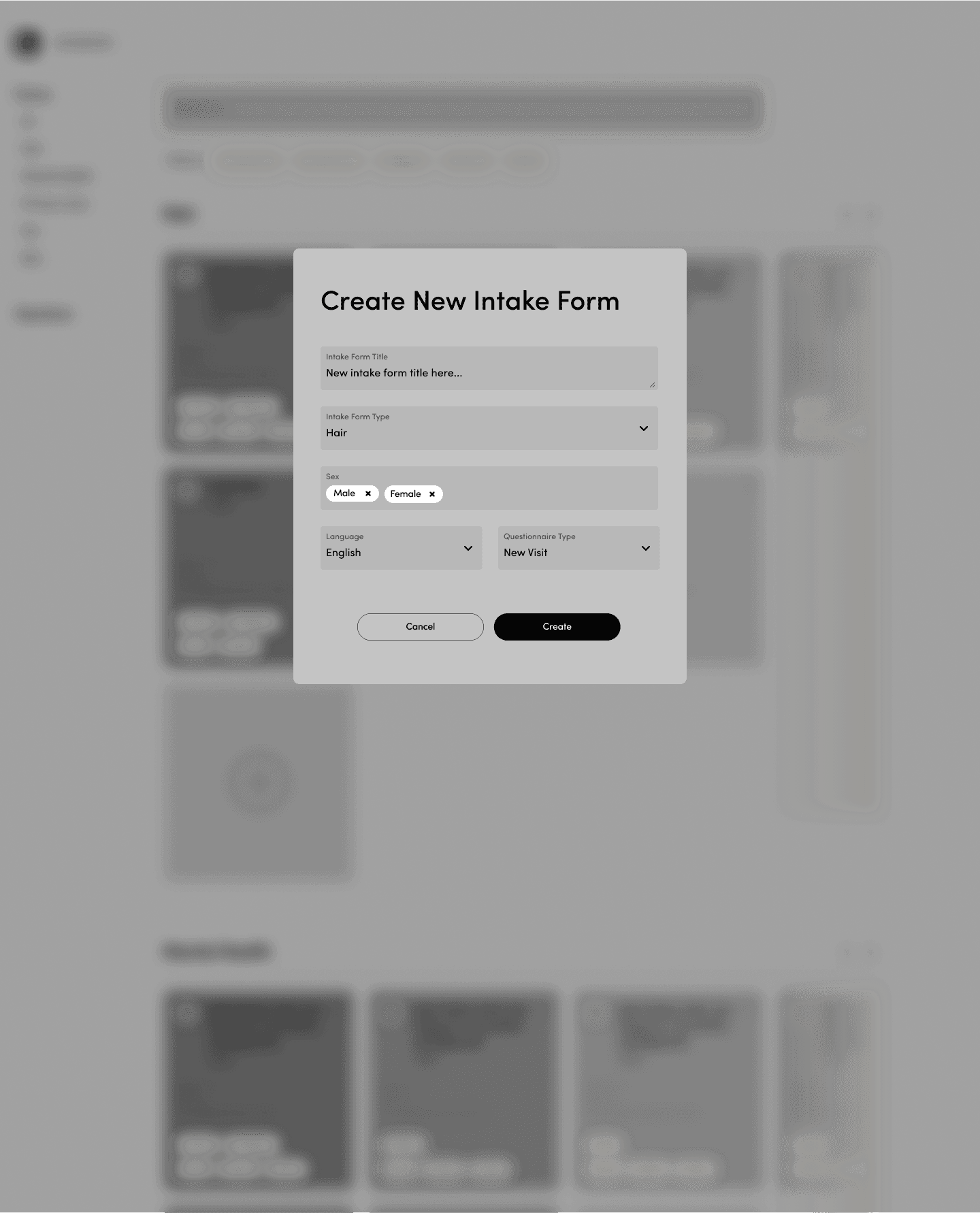
Web of complex questions intertwined
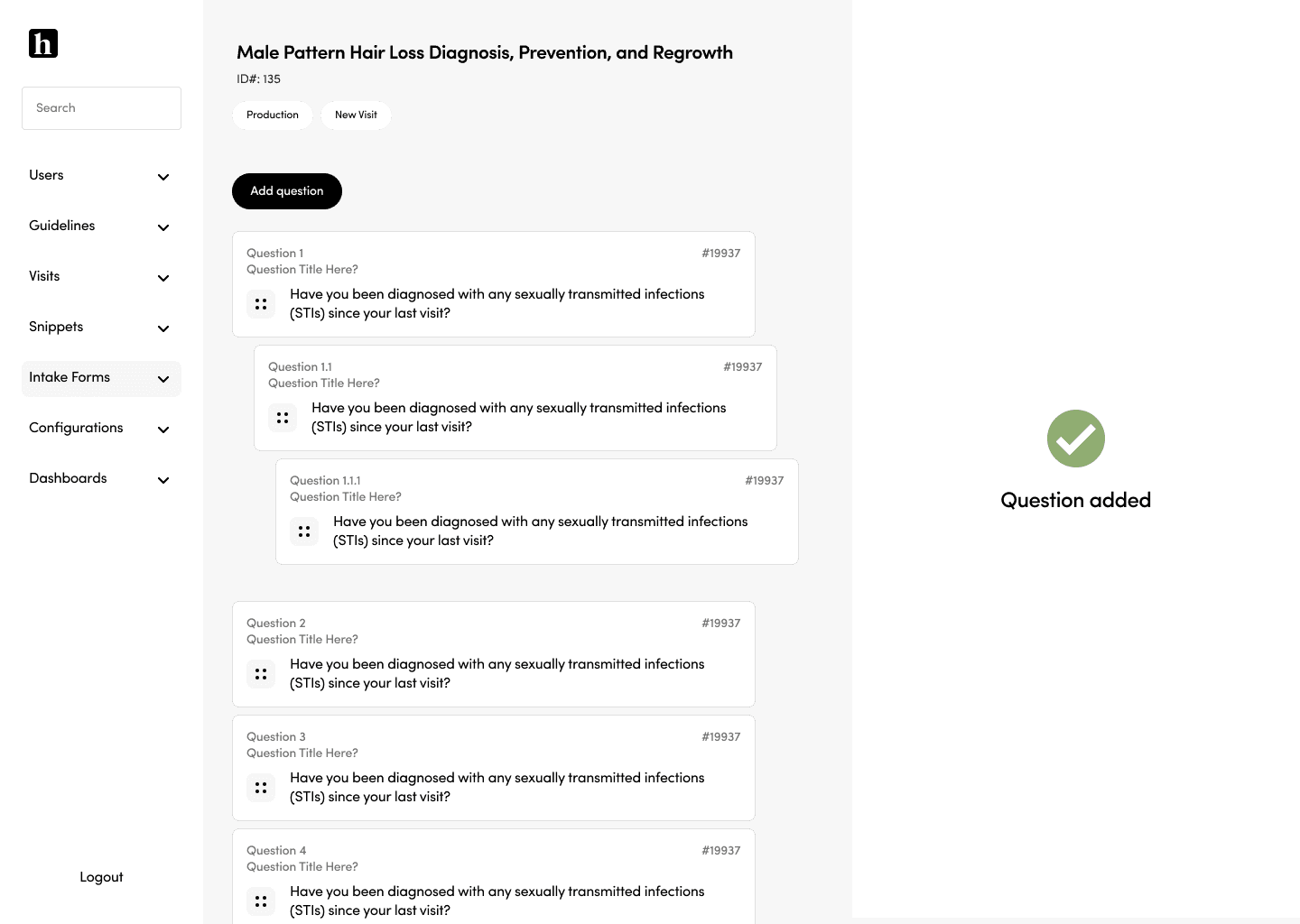
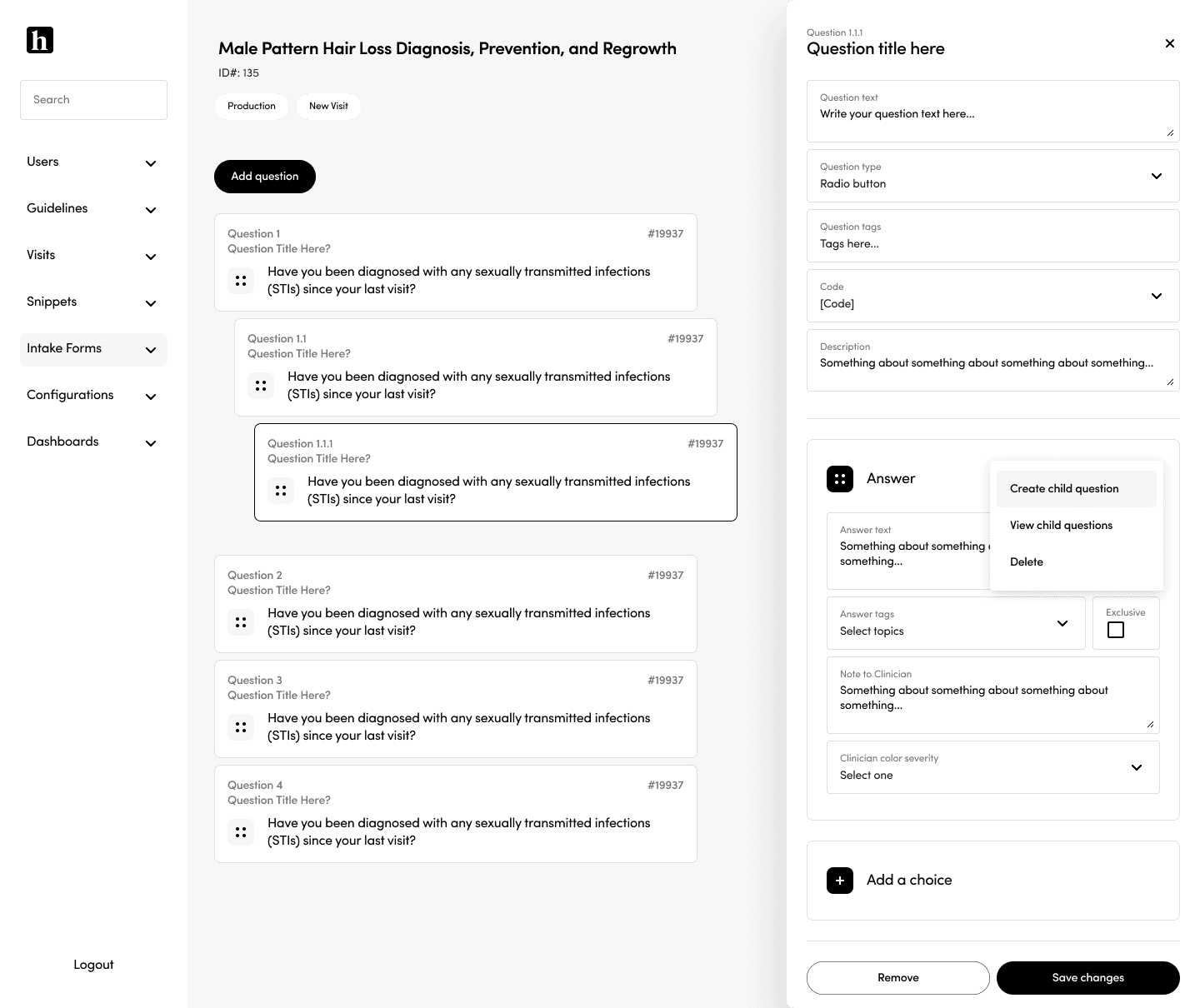
I collaborated closely with Product and Engineering to design the first version of our new intake form system. One of our main goals was making it easier to see all the questions at a glance. Some questions have follow-ups that only appear based on certain answers, so we had to find a clear way to show these related questions when needed.
Key features included a question pool and drag-and-drop functionality, which made it much easier to organize and manage a large set of questions within a form.
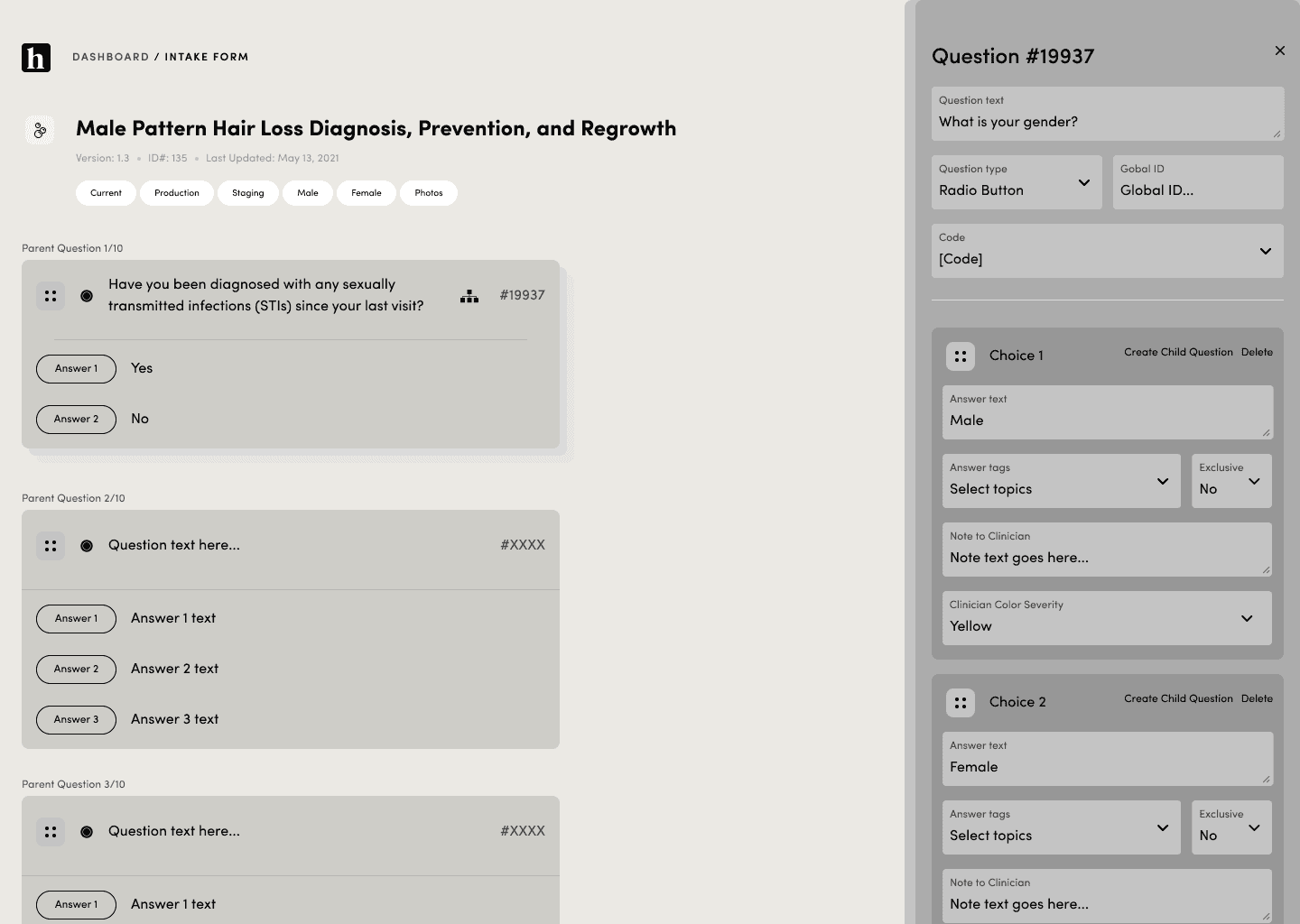
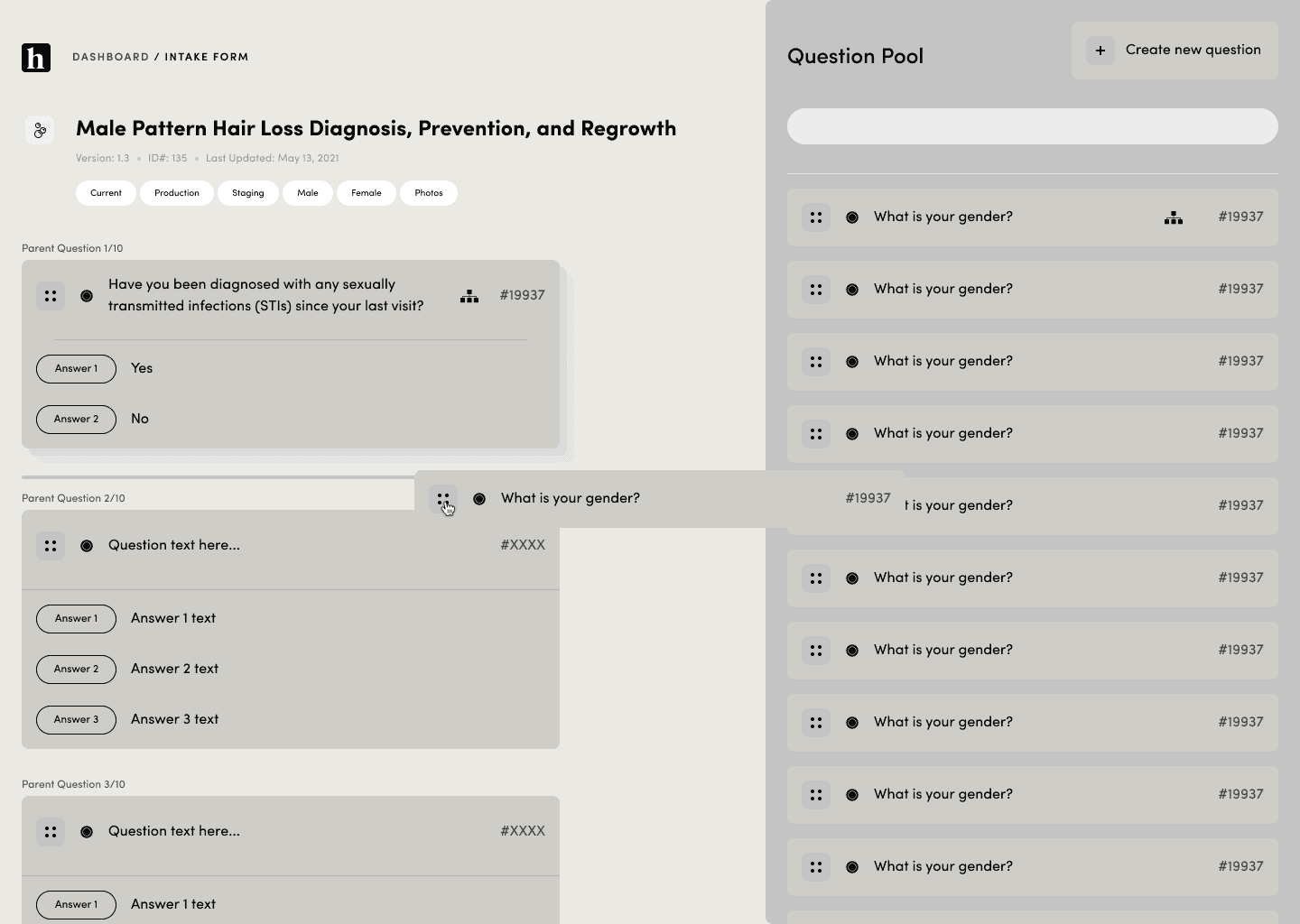
Collabrating at speed
By taking a collaborative approach, we were able to address issues as they came up and quickly iterate on the new intake form system. Seeing the system come to life alongside the designs made it easier to spot what worked and what needed improvement. Working with colleagues as our users also simplified user research compared to traditional testing.
The new intake form is designed to be more intuitive for newcomers and is expected to speed up the intake process by around 20% in the coming months. Since we’re retiring the old system, we were also working under a tight project timeline, which made efficiency a top priority.
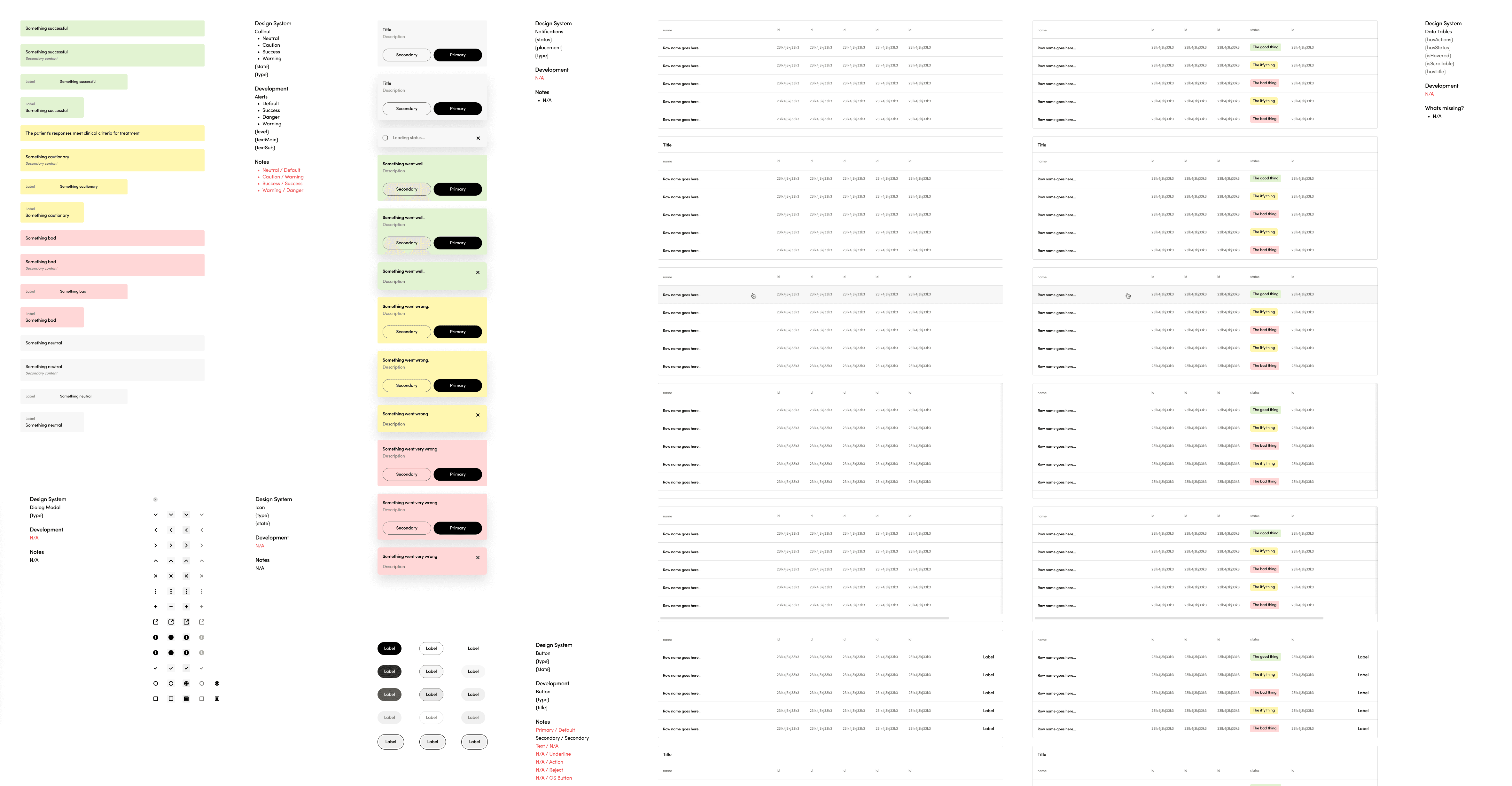
Building out the first steps to a design system for internal tools
Design systems are great for keeping a consistent look and streamlining work across projects, but they don’t always keep pace with changing team needs. While building the first version of the intake form tool, I made sure to double-check our design system in Storybook to confirm it was up to date. This helped engineers work more efficiently and avoid issues later in development.